
For twenty years, enterprise software followed a simple pattern: humans did the work, software helped them do it faster.
That pattern is ending.
In its place, a new operating model is forming — one where software doesn't assist the work, it performs the work, and humans move up the stack to design, govern, and judge. The shift isn't gradual. Gartner expects the share of enterprise apps that embed task-specific AI agents to jump from under 5% in 2025 to 40% by the end of 2026 — an 8x expansion in roughly eighteen months.
That isn't an optimization curve. That's a replacement curve.
And yet, at the same time, McKinsey's State of AI research has found that fewer than one in three organizations have started scaling AI across the enterprise — and by the strictest measure of maturity, only about 1% of companies have achieved scaled, measurable, enterprise-wide AI value.
The gap between those two numbers — fast-moving technology and stalled organizational execution — is the most important strategic fact for any business leader in 2026.
Here are the five shifts behind it, what they actually mean, and where the opportunity lives.
Shift 1: AI Agents Are Replacing Workflows, Not Helping Them

The previous generation of enterprise AI was copilots. You kept your workflow. AI tagged along and made individual steps faster.
The current generation is agents. The workflow itself becomes the agent. Instead of a human executing ten steps with AI assistance on step four, an agent plans all ten steps, executes them, handles the exceptions, escalates what it can't resolve, and produces the result.
Gartner's numbers tell the story: fewer than 5% of enterprise apps embedded task-specific AI agents at the start of 2025. By the end of 2026, Gartner projects that figure to reach 40%. Looking further out, agentic AI could account for roughly 30% of enterprise application software revenue by 2035 — surpassing $450 billion globally, up from around 2% today.
Inside that shift, the practical implication is larger than any single stat: businesses are no longer optimizing tasks. They are replacing entire processes.
What used to be "automate the invoice capture step" becomes "the invoice-to-payment process runs itself, and a human only gets notified when judgment is required." What used to be "a chatbot deflects 30% of tickets" becomes "the support pipeline resolves the majority of Tier-1 and Tier-2 requests end-to-end, with humans handling the minority that actually require discretion."
That's not a faster version of the old model. It's a different operating model — and it demands different architecture, different governance, and different ROI math. We've written separately about what business leaders need to know about agentic AI — this piece is about the broader structural shift it sits inside.
Shift 2: From Tools to Orchestration

The tool era — the era of "pick a SaaS vendor for every function and hope they eventually integrate" — is ending. Not because the tools are bad. Because the tools are no longer the differentiator.
The differentiator is the connective tissue.
In an agent-first architecture, AI becomes the central nervous system of the business — the layer that routes information, triggers decisions, and coordinates action across previously disconnected systems. Success is no longer measured by how many tools you've bought. It's measured by how cleanly they're orchestrated.
This is the inversion most leadership teams haven't absorbed yet. The winners of the next three years will not be the organizations with the longest technology list. They will be the ones with the cleanest systems design — clear data contracts between services, a defined orchestration layer, agent-safe APIs, and an architecture that treats automation as a first-class citizen rather than a bolt-on.
In plain terms: tool collectors lose. System designers win.
The uncomfortable implication for most mid-market companies is that the last five years of procurement have quietly turned them into tool collectors. Reversing that requires an explicit architectural choice — not another vendor cycle.
Shift 3: Hyperautomation Is Now Expected, Not Optional

Hyperautomation — the end-to-end convergence of AI, machine learning, RPA, process mining, and integration — is no longer a frontier concept. It's baseline.
Gartner reports that hyperautomation is a priority for 90% of large enterprises. Fewer than 20% of those enterprises have actually mastered measuring it. By 2026, Gartner projects that 30% of enterprises will automate more than half of their network activities, up from under 10% in mid-2023. The software market enabling hyperautomation is heading toward roughly $1 trillion.
The significance isn't that automation is growing. It's that single-step automation — the old RPA playbook of automating one task at a time — is now a losing strategy.
The businesses gaining ground are building ecosystems: AI handles classification and decision-making, RPA and integration handle execution, machine learning continuously refines the routing, and the entire chain runs end-to-end with humans only at defined control points. Automation stopped being one thing a long time ago — the market caught up in 2025 and 2026.
If your organization is still running discrete automation projects — one bot here, one workflow here — you are not catching up. You are falling further behind, because the rest of the market is compounding at a different pace than you are.
Shift 4: The Real Gap Is Not Technology — It's Implementation
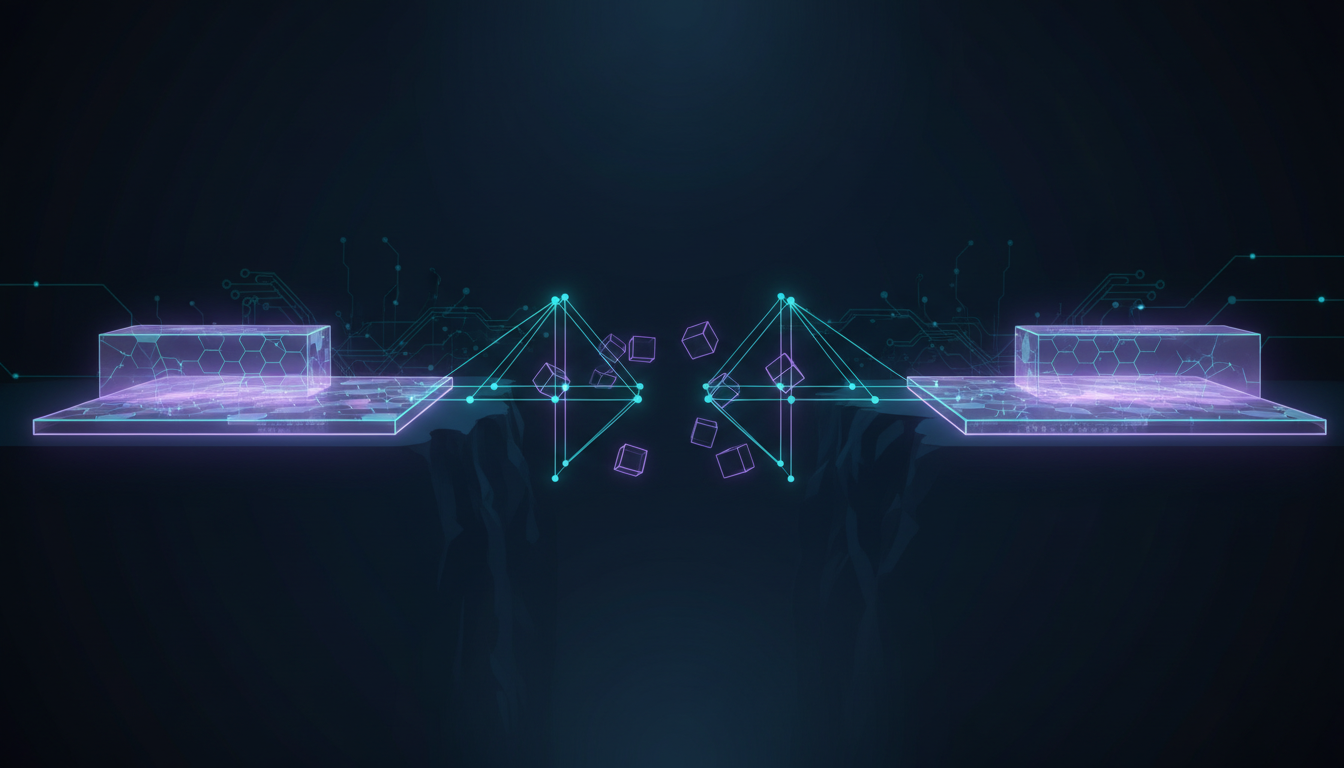
This is the most important shift, and the one that gets the least airtime.
McKinsey's most recent State of AI research found that 88% of organizations report using AI in at least one business function, and 72% are actively using generative AI — up from 33% a year earlier. And yet: no single business function shows more than roughly 10% of organizations with agents at "scaled" or "fully scaled" status. A small elite — around 6% of respondents — qualify as "AI high performers," attributing more than 5% of EBIT to AI. By the strictest measure of true enterprise-wide maturity, the figure is closer to 1%.
Gartner recently warned that more than 40% of agentic AI projects may be canceled by 2027 because they fail to deliver measurable ROI.
Read those numbers together: the technology is arriving. The adoption is happening. The outcomes are not.
This is the wedge.
The constraint has never been whether the model can do the work. It can. The constraint is whether the organization can do the implementation — whether the data is structured, the process is mapped, the governance is defined, the people are trained, and the integrations are built.
In almost every stalled AI program we see, the root cause is not the AI. It's:
- Data in the wrong shape, stored in the wrong places, owned by the wrong teams. The silent killer most programs never name.
- Processes that were never documented, much less standardized, much less automatable.
- No clear owner for the orchestration layer — so every integration becomes a political negotiation.
- No measurement framework, so projects run for two quarters without anyone being able to say whether they worked. The ROI failure pattern is remarkably consistent across industries.
- Change management underestimated, so the humans the system depends on quietly go around it. The last-mile problem is still the real problem.
This is exactly the terrain a good implementation partner operates on. It is also the terrain most AI vendors do not cover, because their incentives stop at the API call.
The companies that will pull ahead in the next three years are not the ones with access to the best models. Every competitor has access to the same models. The companies that pull ahead are the ones that can implement — the ones that combine custom software, thoughtful integration, real process design, and disciplined governance to turn a capability into a scaled outcome.
Start with your Manual Work Tax
The clearest signal of where your implementation gap is hiding is the work your business still runs on humans when it could run on software. Our Manual Work Tax Diagnostic maps it, quantifies it, and ranks the three highest-leverage places to deploy agents, automation, or custom software first. Delivered in 5 business days. Board-ready.
See the Diagnostic — from $497Shift 5: Work Itself Is Being Redefined

The last shift is the quietest and the most disruptive.
AI is now changing how people plan, think, and decide — not just how fast they execute. Even software engineering, the discipline that produced AI in the first place, is being reshaped. Google has publicly stated that 75% of new code at the company is AI-generated and approved by engineers, up from 50% in the prior year. Microsoft has reported that 20–30% of its code is AI-generated, with some projects substantially higher. Meta has set internal targets for the majority of engineers in certain orgs to produce more than three-quarters of their committed code with AI in the first half of 2026.
That is not an efficiency gain. That is a new operating model for the most technical function in the business.
If that's what's happening in engineering, the next two years will see the same shift move into finance, operations, legal review, customer success, sales ops, marketing — every knowledge-work function. Humans won't type less. They'll judge more. The work that survives automation is the work that requires discretion, accountability, taste, and judgment.
Which means leadership has a very different question to answer this year than last year. The question is no longer "how do we buy productivity for our team?" The question is "how do we redesign the work so that the humans we keep are doing the part of the job that only humans can do?"
That's a design question, not a procurement question. Most leadership teams are still answering it with tools.
What This Means for a Mid-Market Business in the Next Ninety Days
If you're running a mid-market company and reading all of the above feels like watching a wave form offshore, the practical question is: what do I actually do?
Three moves, in order.
1. Stop Buying Tools. Start Mapping Work.
The single highest-leverage action any leadership team can take in Q2 2026 is to stop the next three pieces of software they were about to buy and, instead, spend ninety minutes mapping where the business pays the most Manual Work Tax — the hours, errors, and headcount creep that exist because processes run on humans instead of software.
You cannot orchestrate what you haven't mapped. You cannot automate what you haven't standardized. You cannot deploy agents against processes you don't understand. The mapping is the unlock for everything that follows.
2. Pick One Orchestration Wedge. Build the System, Not the Pilot.
The temptation when agentic AI arrives is to run ten pilots in ten departments. Don't. Ten pilots produce zero scaled outcomes — that's the failure pattern Gartner is pointing at when it predicts 40% of agentic AI projects will be canceled by 2027.
Pick one high-value, high-frequency, cross-system process — something that pays a real Manual Work Tax every single day — and design the full orchestration for it. Data contracts. Agent boundaries. Human-in-the-loop control points. Measurement. Governance. Ship it. Measure it. Let the first success fund the second. The pilot-to-production path is the bottleneck, not the pilots.
The companies winning this era are not the ones running more experiments. They are the ones shipping fewer, deeper systems.
3. Build the Operating Model, Not the Tool Stack.
The last and most important move is the least urgent-feeling and therefore the easiest to skip: define your target operating model. What will your business look like when agents do 40% of the work? What roles change? What decisions escalate where? What governance prevents the majority of agentic projects from being the ones Gartner is quietly already writing off?
If your leadership team cannot answer those questions today, the orchestration era is going to happen to your business instead of by your business.
Where ViviScape Fits
This is the gap we work in.
Most of our engagements do not begin with "what model should we use?" They begin with "where is your Manual Work Tax highest, what processes should that inform, and what custom software or agentic system would eliminate the largest category first?" That sequence — map, design, build, orchestrate, measure — is the implementation discipline that, by McKinsey's own data, 99% of companies haven't yet mastered.
If you want to see that discipline applied to your own operation, the fastest entry point is the Manual Work Tax Diagnostic — a paid, human-led review that produces your annualized tax figure, three ranked elimination plays, and a board-ready executive summary within five business days.
The orchestration era isn't coming. It's here. The only question is whether your business is architected to ride it — or is about to discover, a year from now, that its competitors quietly rebuilt themselves while you kept buying tools.
See your own implementation gap in 5 business days
The Manual Work Tax Diagnostic ranks where your business is still running on humans, quantifies the tax in real dollars, and names the three highest-leverage places to deploy agents, automation, or custom software first. Board-ready. Human-led. From $497.
Get the Diagnostic Talk to Our Team